Faith & Spirituality
Understanding Pentecost: What the Holy Spirit's Diversity Teaches the Church Today
Pentecost is one of the most important events in the story of the early Church because it demonstrates something remarkable about the work of the Holy Spirit: the Spirit creates unity without destroying diversity.
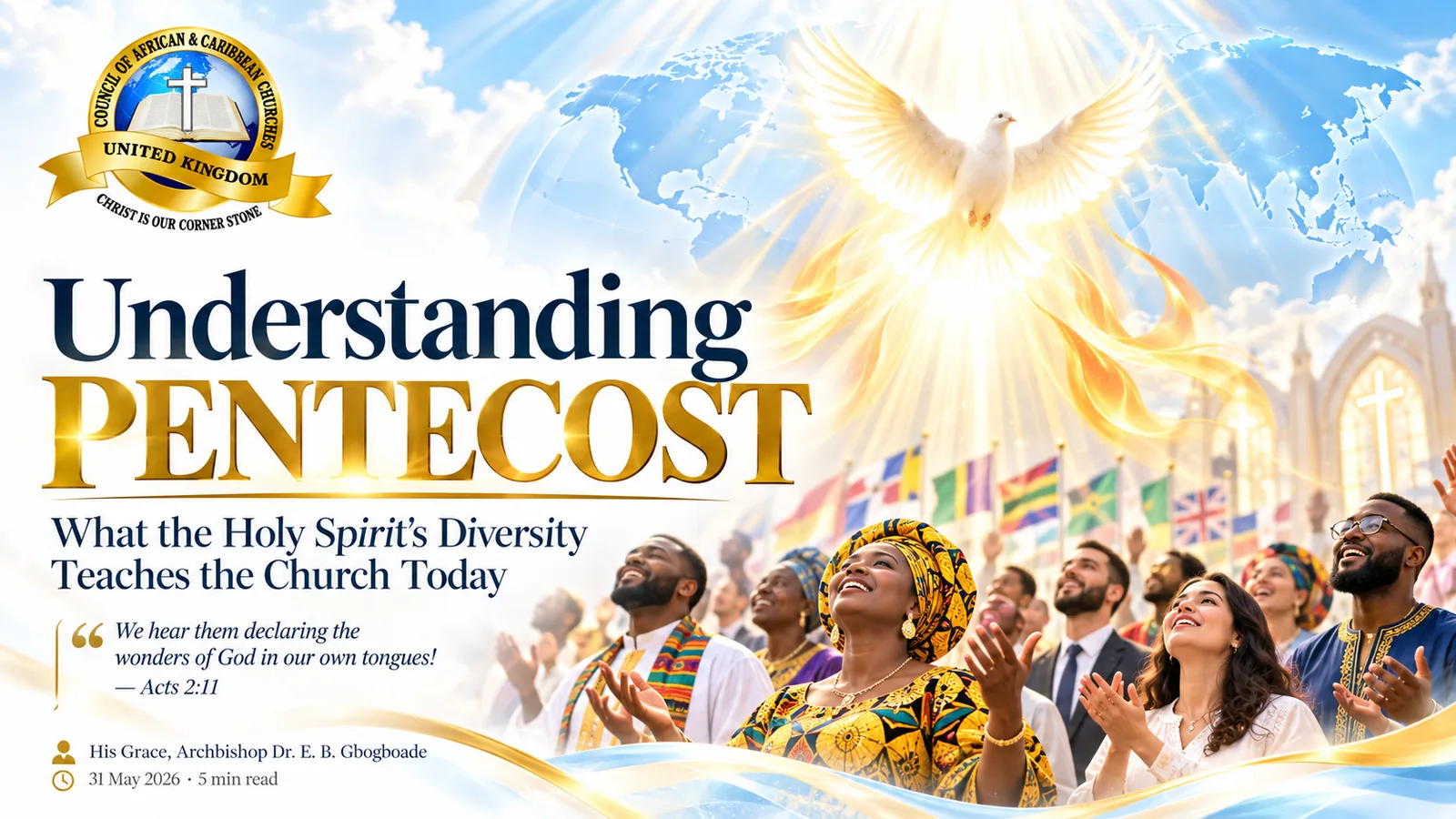
We hear them declaring the wonders of God in our own tongues! — Acts 2:11
Reflection 01
The Spirit creates communion without sameness
Pentecost is one of the most important events in the story of the early Church because it demonstrates something remarkable about the work of the Holy Spirit: the Spirit creates unity without destroying diversity. In Acts 2, people from different nations and linguistic backgrounds hear the disciples declaring God's mighty works. The miracle is not presented as the creation of one culture, one language or one ethnic identity. Instead, people encounter the message of God in a way they can understand. Pentecost therefore challenges every generation of Christians to think carefully about what genuine spiritual unity looks like.
Reflection 02
Diversity is not a problem to solve
One of the first lessons of Pentecost is that diversity is not automatically a problem to be solved. The people present in Jerusalem came from different places and carried different cultural identities. Yet the Spirit brought them into one extraordinary moment of encounter. This provides an important theological principle for the contemporary Church: unity does not require sameness. The Holy Spirit can work across differences of language, ethnicity, age, social background and cultural expression without requiring everyone to become culturally identical.
Reflection 03
A table wide enough for many cultures
This matters greatly in multicultural churches. A congregation may contain people whose understanding of worship was shaped in Africa, Europe, the Caribbean, Asia or North America. One person may prefer hymns while another grew up singing contemporary worship. One family may be accustomed to long services, while another is accustomed to a more structured liturgy. These differences can become sources of tension when they are treated as threats. Pentecost invites the Church to ask a different question: how can our differences become opportunities to experience the breadth of God's work?
Reflection 04
Speaking so that people truly understand
The diversity of Pentecost also teaches the Church about communication. The disciples did not simply speak; people understood. This is a significant lesson for Christian mission today. The Gospel does not change, but the way we communicate it must sometimes change. A church serious about reaching young people cannot communicate as though every young person lives in the same cultural environment as previous generations. Churches must learn the language of digital culture, visual communication, social media, contemporary questions and new forms of community while remaining faithful to biblical truth.
Reflection 05
Belonging beyond the dominant culture
There is also a lesson about belonging. Pentecost was not an event in which outsiders were told to become exactly like the original disciples before they could participate. The Spirit crossed boundaries. This challenges churches to examine how welcoming they really are. Do people from different backgrounds feel that they are genuinely part of the community, or do they feel that they must imitate the dominant culture before they are accepted? Inclusion is more than allowing people to enter a building. It means creating a community where people can contribute, serve, lead and grow.
Reflection 06
Gifts given for the good of all
Pentecost further challenges the Church's understanding of spiritual gifts. The Holy Spirit distributes gifts among God's people, and those gifts are not given for personal status. They are given for service and the building up of the body. A healthy church therefore does not measure spiritual maturity solely by how visible someone's ministry is. The person preaching to hundreds and the person quietly caring for one elderly member can both be participating meaningfully in the Spirit's work. The Church must learn to honour different forms of service.
Reflection 07
Diaspora churches as bridges
For diaspora churches, Pentecost carries an additional message. Migration can create communities where multiple cultures exist simultaneously. Rather than seeing this complexity as an inconvenience, churches can understand it as a mission opportunity. A congregation that contains several generations and cultures has the potential to become a bridge between communities. Children can learn from grandparents. Migrants can build relationships with people born in Britain. Different Christian traditions can encounter one another. The Church can become a place where cultural diversity is not merely tolerated but transformed into fellowship.
Reflection 08
Sent outward in the power of the Spirit
The final lesson is that Pentecost produces mission. The disciples did not receive the Spirit simply to have a powerful private experience. They were empowered to witness. This is critical for the Church today. Spiritual experiences must ultimately produce transformed lives, courageous witness, compassionate service and deeper love for God and neighbour. Pentecost reminds us that the Holy Spirit does not make the Church smaller and more inward-looking. The Spirit sends the Church outward. In 2026, the challenge is to become communities where diversity is welcomed, gifts are released, cultures are respected and the Gospel is communicated with courage and clarity.